
 alex de Bold
Virtual try on has changed everything for online businesses. The VTO tool helps users visualize the product without actually having to visit a store. This brings convenience and buyer’s confidence, making sales touch new numbers.
However, VTO is much more than a tool for sales. It makes your buying journey experiential. Many people now prefer to buy a product based on this online experience and then reduce returns and hesitation.
In this article, we will talk about how VTO is a great tool for more than sales and what feats it has achieved in e-commerce. We will also touch on some fun facts about the tool.
The Psychology Behind Virtual Try On
Virtual Try-On (VTO) technology taps into key psychological drivers that influence online shopping behavior, mainly confidence, certainty, and engagement. One of the biggest hurdles in e-commerce is purchase anxiety, shoppers hesitate when they cannot see how a product will look or fit.
VTO helps reduce this uncertainty by allowing users to visualize products on themselves before buying, which strengthens confidence in decision-making and reduces hesitation. Research suggests that online products featuring augmented reality experiences can see significantly higher engagement and conversion rates compared to those without visual try-ons, signaling that clearer mental imagery directly impacts consumers’ willingness to purchase.
Consumers increasingly expect immersive shopping tools; for example, 76% of shoppers expect brands to offer virtual try-on features in the near future, and products with AR experiences show higher conversion rates and lower return rates.
This combination of confidence, reduced uncertainty, and interactive engagement makes VTO a powerful psychological tool that bridges the emotional gap between online browsing and in-store experience.
What VTO Has Helped Brands And E-Commerce Achieve?
Virtual try on tools for eyewear or otherwise have helped many brands achieve major feats. These achievements have helped smaller brands become established players in their domain over time.
Higher Conversion Rates
Virtual Try-On (VTO) technologies have been shown to significantly boost online conversions by helping customers visualize products before purchase. Retailers implementing AR or 3D try-on tools report conversion increases ranging from 25% up to over 60%.
This is because interactive experiences reduce hesitation and encourage checkout completion. Products enhanced with 3D or AR content convert at significantly higher rates than those with only static images.
Reduced Return Rates
One of the biggest cost drivers for online retailers is product returns, especially for fit-sensitive items. With VTO tools, brands report return rate reductions of 20 to 40% because customers make more informed choices about size, fit, and style before purchasing.
This not only saves on reverse logistics but also supports inventory stability and customer satisfaction.
Increased Engagement and Sales Growth
Interactive try-on features keep shoppers engaged longer, which correlates with higher sales. Some retailers have seen up to 30% sales growth within months of adopting virtual try-on, alongside greater engagement metrics such as prolonged time on product pages and more products explored per session.
Enhanced Customer Confidence and Satisfaction
By reducing uncertainty, a major barrier in e-commerce, VTO helps buyers feel confident in their decisions. Surveys show a substantial share of consumers prefer retailers that offer virtual try-on experiences, and many are willing to pay more when they feel assured about fit and appearance.
10 Fun Facts About Virtual Try On Experiences
VTO experiences have some fun facts. These facts just solidify this tool in the market and its value in modern markets.
1. Conversion Rates Jump Dramatically
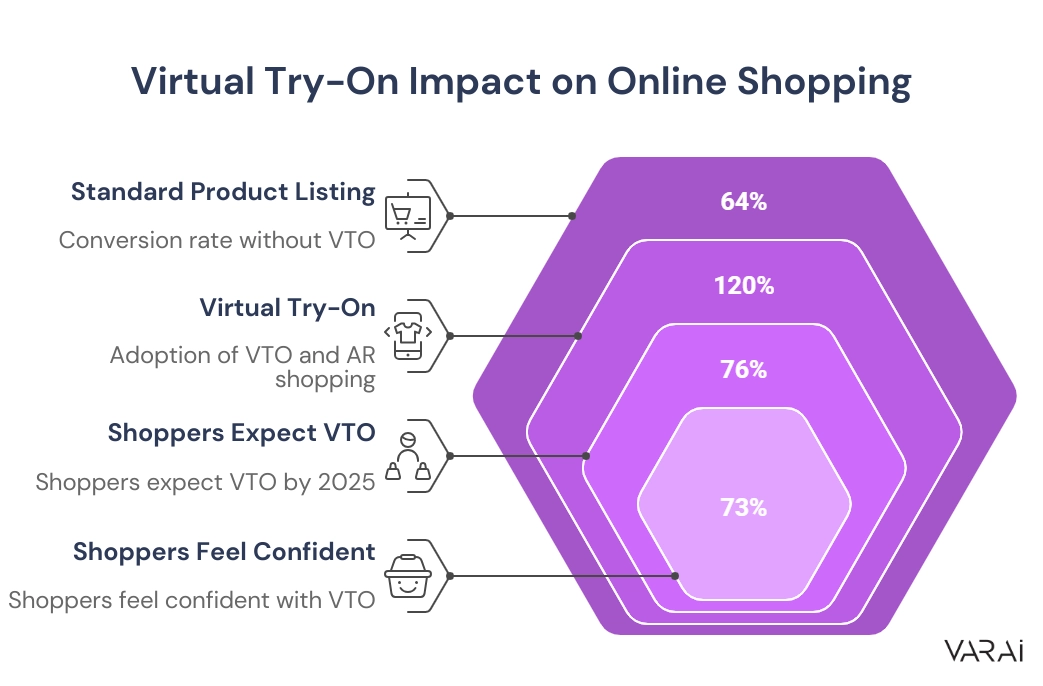
Products featuring virtual try-on have shown up to 64% higher conversion rates compared with standard product listings, helping browsers turn into buyers more often.
2. Return Rates Can Drop Sharply
Return rates for online purchases typically fall by 25 to 30% when shoppers use virtual try-on tools, because customers make better size and style decisions.
3. Shoppers Buy Faster
Customers using virtual try-on tools tend to decide more quickly, with purchase decisions happening about 40% faster than without VTO.
4. Usage Is Growing Fast
Adoption of virtual try-on and AR shopping surged by over 120% in recent years as brands integrate these features into online stores.
5. Major Consumer Expectations
By 2025, 76% of shoppers expect brands to offer virtual try-on experiences as part of standard online shopping.
6. Revenue Increases Are Common
Retailers with virtual try-on report 25 to 30% revenue growth, thanks to higher engagement and better buying confidence.
7. Engagement Soars
Interactive product visuals, including try-on, can lead to 200% increases in user engagement on e-commerce sites.
8. Confidence Leads to Bigger Carts
Shoppers often feel 73% more confident in their purchases when try-on tools are available, encouraging larger or multiple item buys.
9. AR Shoppers Stay Longer
Customers interact longer with product pages that feature AR elements like virtual try-ons, which strengthens brand recall and interest.
10. Mobile AR Is Nearly Universal
With billions of AR-capable mobile devices worldwide, virtual try-on experiences are now accessible to a vast majority of online shoppers without special hardware.
How VTO Can Help Your Business Grow?
Virtual Try-On (VTO) technology helps businesses bridge the gap between online browsing and in-store confidence. By allowing customers to visualize products on themselves in real time, VTO reduces uncertainty and builds trust—two critical factors that directly influence purchasing decisions. When shoppers feel confident about how a product looks or fits, they are more likely to complete a purchase and less likely to abandon their carts.
From a performance standpoint, VTO improves key e-commerce metrics while enhancing the customer experience. Interactive try-on tools increase engagement, keep users on product pages longer, and encourage exploration of more styles or variants. This deeper interaction often translates into higher conversion rates and increased average order value.
VTO helps businesses grow by:
- Increasing conversion rates through improved purchase confidence
- Reducing product returns by setting clearer expectations before checkout
- Boosting engagement and time spent on product pages
- Encouraging customers to try new styles or premium options
- Strengthening brand credibility through immersive, modern experiences
Over time, VTO also supports scalability. As customer expectations for interactive shopping continue to rise, brands that adopt virtual try-on position themselves as forward-thinking, customer-centric, and better equipped to compete in a digital-first market.
VARAi Offers One Of The Best VTO Tools Online
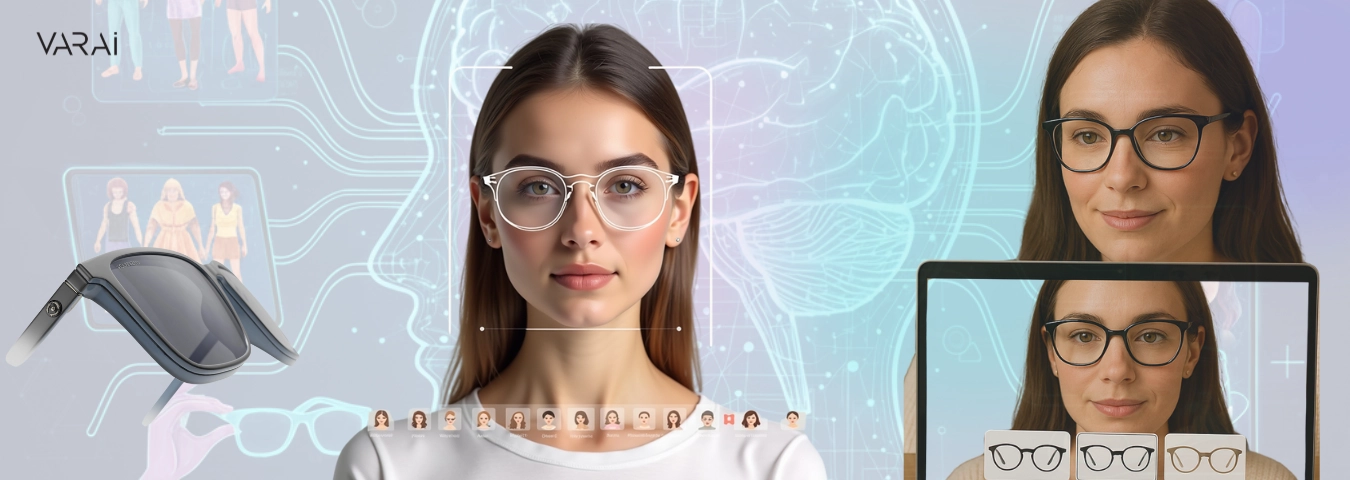
VARAi’s Virtual Try-On (VTO) tool is purpose-built for the eyewear industry, combining advanced AI with high-fidelity 3D rendering to deliver a realistic and accurate try-on experience. Using AI-driven facial mapping and precise frame positioning, VARAi allows customers to see how eyewear fits and moves in real time, bridging the gap between online shopping and in-store confidence.
Key capabilities of VARAi’s Virtual Try-On include:
- AI-powered facial landmark detection for accurate frame placement
- Realistic rendering of acetate, metal, and lens materials
- Natural frame movement that adapts to head and face motion
- Smooth integration with e-commerce platforms and digital catalogs
- Built-in AI recommendations to guide users toward suitable styles
Beyond customer experience, VARAi’s VTO is designed to deliver measurable business impact by increasing engagement, improving conversion rates, and reducing returns. For eyewear brands, retailers, and opticians looking to modernize their digital storefronts, VARAi provides a scalable, high-performance virtual try-on solution built for real-world use.
Conclusion
Virtual Try-On is no longer a novelty or an optional enhancement, it has become a defining element of modern e-commerce experiences. As this article explored, VTO goes far beyond driving sales. It addresses the psychological barriers of online shopping, reduces uncertainty, and replaces hesitation with confidence by allowing customers to see, experience, and connect with products before buying.
The measurable feats achieved by brands, from higher conversions and lower returns to deeper engagement and stronger customer satisfaction, demonstrate the tangible business value of this technology.
As consumer expectations continue to shift toward immersive and personalized digital journeys, businesses that adopt VTO position themselves ahead of the curve. Tools like VARAi’s Virtual Try-On show how advanced AI, realism, and seamless integration can transform how customers interact with eyewear online. Ultimately, VTO represents the future of experiential commerce, one where confidence, convenience, and connection drive sustainable growth in a digital-first marketplace.