
 alex de Bold
When it comes to eyeglasses all we care about is the looks and how stylish the design is. Most consumers often miss out on the most important part, the material used to create the eyewear. Even though you might only know about acetate, TR90 and bio-acetate are also popular choices.
But why? These acetates frame like materials behave like plasticizers for eyewear but they both have their advantages and disadvantages. So which is better: TR90 or bio-acetate?
In this article, we will discuss the differences between TR90 and bio-acetate. To understand which material may be more suitable for you and which one you should choose, keep on reading.
What Is TR90?
TR90 is a lightweight, ultra-flexible thermoplastic material widely used in modern eyewear. Made through Swiss technology, it offers exceptional durability, impact resistance, and shape memory.
This allowing frame manufacturers to offer bendy and break-resistant eyewear to its audience. TR90 is also hypoallergenic, making it suitable for sensitive skin. Its low weight improves long-term comfort, while its elasticity ensures a secure fit for active, everyday use.
Overall, TR90 delivers a strong balance of comfort, performance, and resilience, making it a preferred choice for contemporary eyewear brands.
What Is Bio-Acetate?
Bio-acetate is a 90% to 100% eco-friendly, plant-based version of traditional acetate used in premium eyewear. Made from renewable materials and natural plasticizers, it reduces reliance on petroleum and eliminates harmful phthalates.
The interesting fact is that it offers the same durability, flexibility, and rich color options as standard acetate, but with a significantly lower environmental impact. It is also hypoallergenic and biodegradable under industrial conditions, making it a sustainable choice for brands.
Many consumers in 2026 look for high performance high environmental-friendly options, of which these high-quality frames align with modern environmental and ethical standards.
Core Differences Between TR90 vs Bio-Acetate
When comparing TR90 and Bio-acetate, the contrast goes beyond material choice and performance, it is rooted in quality, sustainability, and comfort.
Here’s a clear breakdown across the categories that matter most in eyewear design and consumer preference.
Material Composition & Sustainability
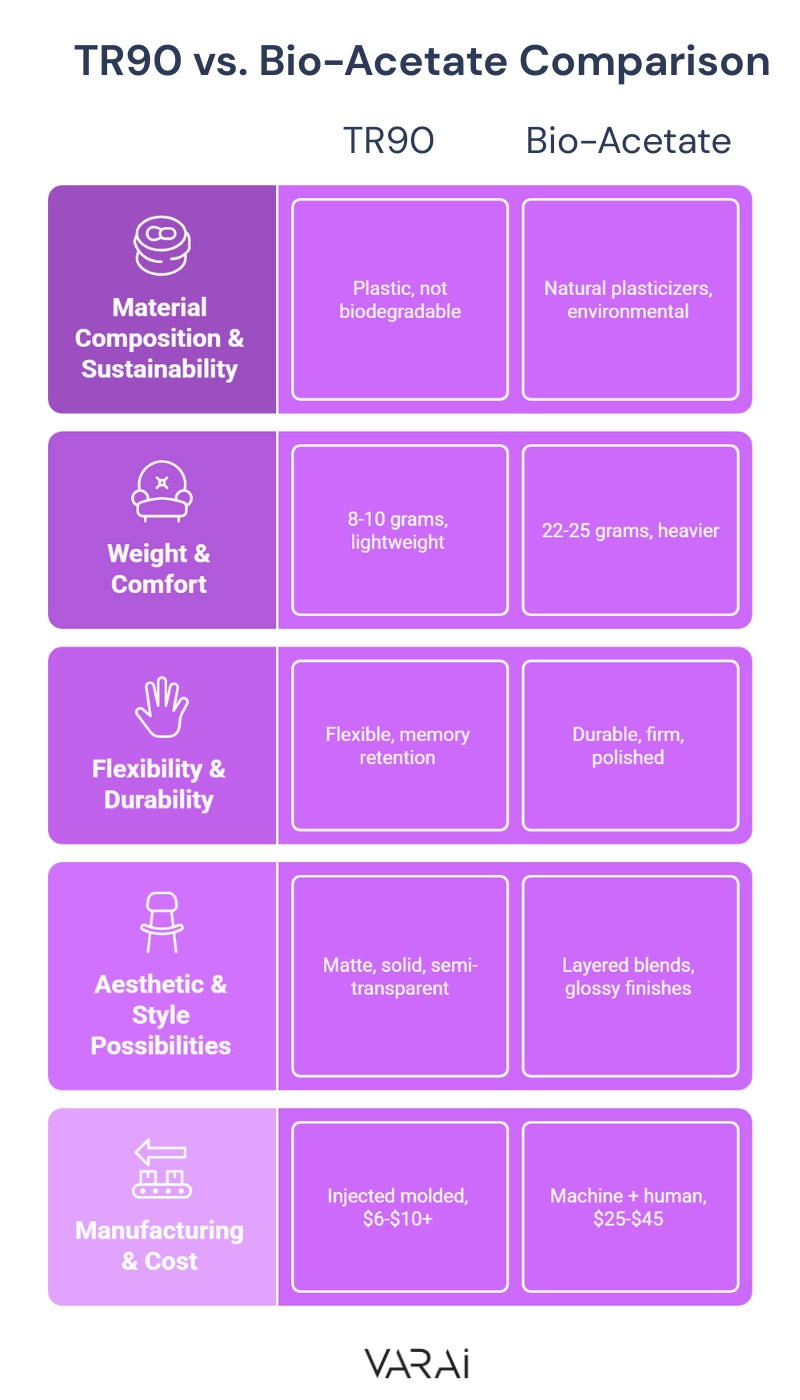
When comparing TR90 and Bio-Acetate in terms of material composition and sustainability, Bio-Acetate wins. Starting with TR90, it is known as the “performance plastic”, however it’s just that, plastic that is not biodegradable. But the other is made of natural plasticizers and is environmental.
As for composition, TR90 is a better option. It is a tad bit durable compared to bio-plastic. This is why it is used in high-stress environments and uses like aerospace and sports eyewear. Bio-acetate may break more easily and might be softer.
Weight & Comfort
The weight difference between the two materials is quite drastic. In numbers and grams, the weight of TR90 and bio-acetate may not feel like much but for the user this will be noticeable. According to a source, the materials weigh as following:
- TR90 frames weigh about 8 to 10 grams per eyewear. It is a low density material and is in the category of “memory plastics” which already weigh 20% less than other plastics.
- Bio-Acetate frames weigh about 22 to 25 grams. The sheet-based production makes the cutting and shaping of the eyewear different adding to the weight. However, it is generally also used in luxury eyewear due to its heft and substantialness.
Choose TR90 for daily wear and bio-acetate frames for occasional fashion wear.
Flexibility & Durability
The straight answer to this is that TR90 frames are flexible and bio-acetate frames are durable. TR90 material has something called memory retention which means, that the plastic can be twisted, bent, or pulled, and it will still return to its original shape.
On the contrary, bio-acetate can’t be stretched to these limits. However, its durability is much more. These frames are supposed to be firm, polished, and built to keep its shape for years to come. Hence, if you want a rigid eyewear that’s stylish, conscious, and luxurious, bio-acetate is better.
Aesthetic & Style Possibilities
The visual difference between these materials is instantly noticeable. However, sometimes bio-acetate also has its own limitations which can make it seem similar to TR90.
- TR90 typically comes in matte, solid, or semi-transparent shades. It is clean, modern, minimal, but limited. Mostly has a matte finish with limitation on shine and polish.
- Bio-Acetate is the artist’s playground and offers layered blends, deep tortoise patterns, glossy finishes, gradients, and rich color stories. However, its high polish can sometimes show even small inconsistencies.
For bold, statement-making designs, Bio-acetate dominates. For sporty or minimalist silhouettes, TR90 fits better.
Manufacturing & Cost Differences
The manufacturing cost differences are huge between TR90 vs. Bio-Acetate. TR90 is injected molded, which means faster production, high volume, and no cost on hand carving. Hence, the per-unit cost for TR90 eyewear is just $6 to $10+, depending on customizations.
Now Bio-Acetate frames are already a luxury for many as it has fewer manufacturers and a high cost attached to it. It is more artisanal and requires machine + human cutting, shaping, buffing, and polishing. This rides up the cost per unit to up to $25 to $45 for a single eyeglass.
Hence, comfort and luxury might cost you a hefty price compared to performance less stylish eyewear. However, acetate manufacturing is much cheaper and might compare well to TR90 material glasses.
Which One Should You Choose TR90 Eyewear Vs. Bio-Acetate Eyewear?
Overall, TR90 eyewear is the better choice for most users due to its lightweight feel, extreme flexibility, and unmatched durability. It excels in comfort, everyday wear, and active lifestyles, making it highly practical.
Bio-acetate, on the other hand, is an okay alternative if you prefer premium aesthetics, rich colors, and eco-friendly materials. While it delivers style and craftsmanship, it’s heavier, less flexible, and more prone to cracking under stress compared to TR90.
Where To Find The Best TR90 and Bio-Acetate Frames?
There are many online eyewear brands that you can explore for buying TR90 and bio-acetate frames. Maybe even your favorite eyewear brand offers some. However, we find these 3 best brands for buying TR90 and Bio-acetate eyewear online for your convenience.
1. FramesDirect
Offers a vast collection of over 5,000 eyewear styles, including TR90 and bio-acetate frames. Average price for eyewear ranges from $100 to $300. They also offer designer variety, clear material labeling, and a mix of styles suited for everyone.
2. EyeBuyDirect
Features 1,500+ eyewear options, spanning TR90 and eco-friendly bio-acetate frames, with average prices from $50 to $150. Starting from $6, you can get budget-friendly eyewear for your family and choose between some style-conscious designs that are affordable for everyday wear.
3. GlassesShop
Hosts 3,000+ frames, including TR90 and acetate models, priced moderately at $20 to $120 on average. They are also an economical eyewear brand with selections for both children and adults. Their specialty is active lifestyles and eyewear that matches such tense requirements.
TR90 Vs. Bio-Acetate: Why Not Both?
As a consumer you might be thinking why can’t I buy both TR90 vs. Bio-Acetate frames? And the answer is you can! It’s just important that you understand that both types of eyewear has its own uses and comfort level.
If you would like something high performance, flexible, and a minimal design, TR90 eyewear frames will do wonders for you. But if you want to carry something fashionable and a statement piece for an event, Bio-Acetate eyewear frames will make more sense.
Remember, that eyewear frames are made for you and your comfort. So work with a brand that has advanced 3D technology to support your fit and performance needs to the best of its ability. But if you are a brand who wants to improve its 3D digital presence, VARAi is just for you!
We offer advanced eyewear SaaS plugins that help brands in 3D visualization, digitizations, and customization of their own eyewear designs. Click here to get a free demo!